Vinyl Fence Installation Brownsville TX
Premium Vinyl Fencing for Rio Grande Valley
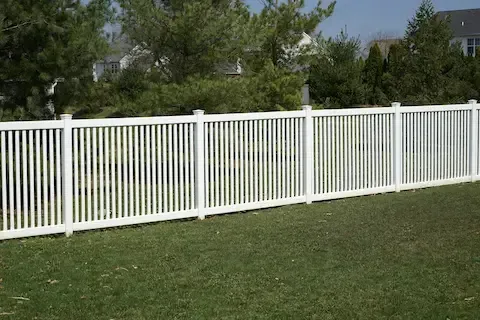
Vinyl fencing has emerged as the premier low-maintenance option for Brownsville homeowners seeking to avoid the humidity damage and constant upkeep wood requires in South Texas climate. Our installations use commercial-grade vinyl formulated specifically for extreme UV exposure and temperature fluctuations, with engineering adjustments that address thermal expansion challenges that cause premature failure in standard vinyl products.
Premium vinyl fencing with UV stabilizers and thermal expansion engineering designed for extreme South Texas conditions.
What's Included in our Vinyl Fence Installation service?
UV-Stabilized Materials for South Texas Sun
Brownsville receives over 220 days of intense sunshine annually, with summer UV index regularly reaching extreme levels. Standard vinyl fencing begins chalking and color fading within 2-3 years under these conditions. We install only virgin vinyl with titanium dioxide UV stabilizers rated for coastal Florida and South Texas exposure—the highest UV protection category available. Our material specifications include minimum 0.055-inch wall thickness for structural components and impact modifiers that prevent brittleness as material ages. For south-facing installations and properties with full sun exposure near Los Fresnos or San Benito, we recommend white or light neutral colors that minimize heat absorption and dimensional changes.
Thermal Expansion Engineering
Cameron County experiences temperature swings from freezing winter nights to 100°F+ summer afternoons—vinyl expands and contracts significantly across this range. Improper installation leads to warped panels, pulled fasteners, and gate binding. Our installations incorporate expansion gaps in horizontal rails, use slotted mounting holes that allow movement, and avoid over-tightening fasteners that restrict natural expansion. For fence runs exceeding 50 feet, we install expansion joints at strategic intervals and use reinforced posts at direction changes. Gate installations receive special attention with stainless steel hinges and hardware that accommodate dimensional changes without binding or sagging.
Wind Load and Hurricane Preparation
Vinyl's light weight makes it vulnerable to wind uplift during hurricane events. We counter this through upgraded post embedment (3 feet minimum in concrete), aluminum reinforcement inserts in horizontal rails for runs exceeding 6 feet, and bottom rail installation that prevents panels from lifting out of position. Privacy-style solid vinyl fencing creates maximum wind load—for these installations in coastal Cameron County zones, we space posts at 6-foot centers rather than 8-foot, use 5-inch posts instead of 4-inch, and recommend lattice-top designs that reduce overall wind resistance. Our team provides hurricane preparation guidance including panel removal procedures for storm events when sustained winds exceed 100 mph.
Serving Brownsville and Surrounding Cameron County Communities
Quality Fence Installation Throughout the Rio Grande Valley
When you need professional fence installation in the Rio Grande Valley, we bring Cameron County's most trusted craftsmanship to your property. From coastal Los Fresnos to agricultural La Feria, our team understands the unique demands of South Texas fencing—hurricane wind loads, subtropical humidity, salt air corrosion, and the aesthetic preferences that define border region properties.
Proudly serving Brownsville, Rancho Viejo, Los Fresnos, Harlingen,
Port Isabel and San Benito for 10+ years.
Comprehensive Fence Installation Services in Brownsville
Tailored to Your Needs
Our comprehensive fence installation services address every property type across Brownsville and Cameron County. Whether you're securing a Port of Brownsville industrial facility, enclosing a residential lot near the international bridge, protecting ranch land along the Rio Grande floodplain, or adding curb appeal to a historic downtown property, we deliver installations built for extreme South Texas conditions and designed to last through hurricane seasons.
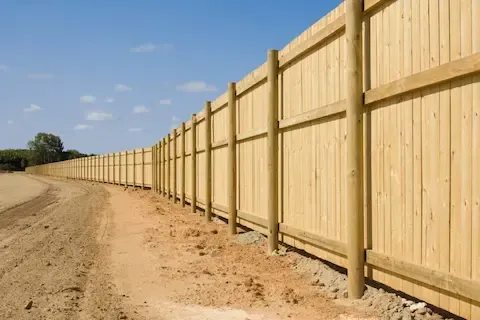
Expert wood fence installation using hurricane-rated construction and humidity-resistant materials selected specifically for Rio Grande Valley climate conditions.
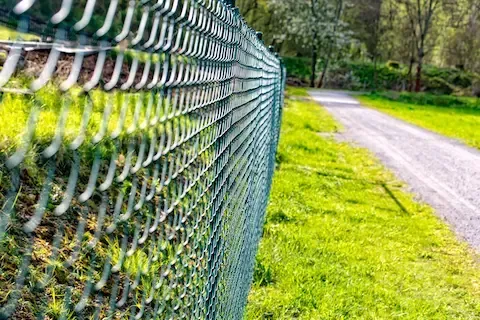
Commercial-grade chain link fence installation for industrial properties, securing facilities with corrosion-resistant materials engineered for coastal salt air exposure.
Low-maintenance vinyl fence installation offering superior UV resistance and thermal expansion engineering for extreme South Texas sun exposure and temperature swings.
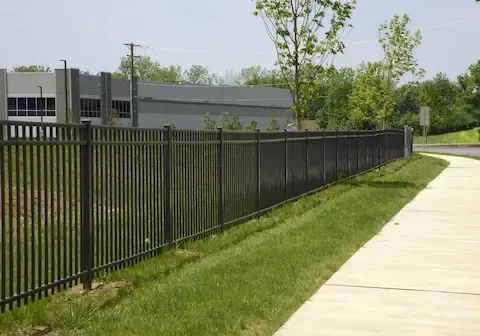
Custom wrought iron fence installation featuring powder-coated corrosion protection and traditional border region architectural styling for elegant property perimeters.
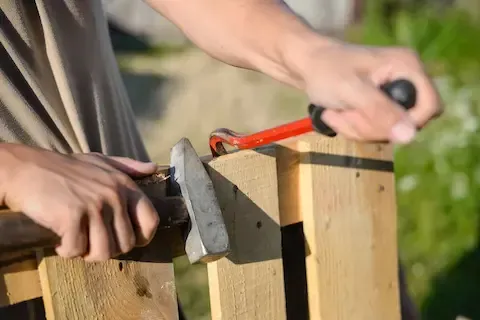
Emergency fence repair services addressing hurricane damage, wood rot, corrosion failure, and structural issues with same-day response throughout Cameron County.
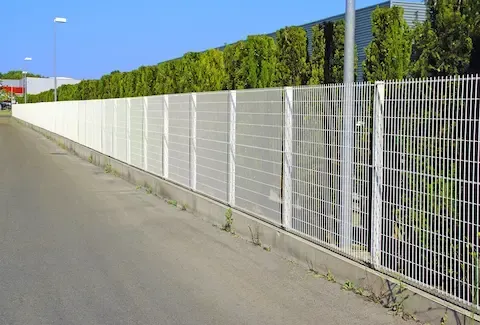
Industrial-grade commercial fence installation for warehouses, manufacturing facilities, and Port of Brownsville properties requiring federal security compliance.
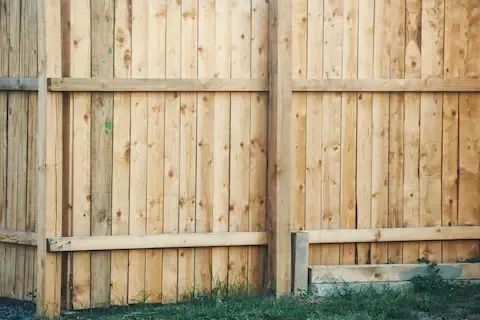
Solid privacy fence installation providing complete visual screening with wind-resistant design engineered for Cameron County hurricane exposure and building codes.
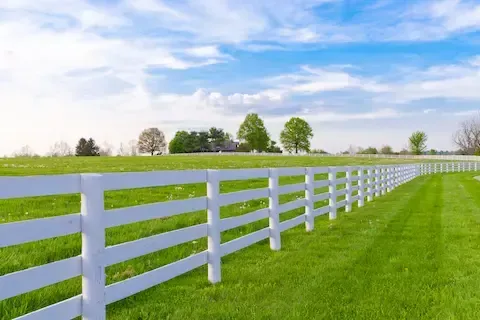
Agricultural fencing installation for Cameron County ranches and farms, featuring livestock containment systems and property boundary fencing built for South Texas conditions.
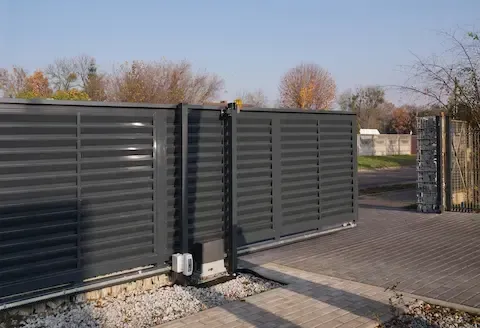
Automated gate system installation with hurricane-rated motors and salt-air corrosion protection for residential and commercial properties throughout Cameron County.
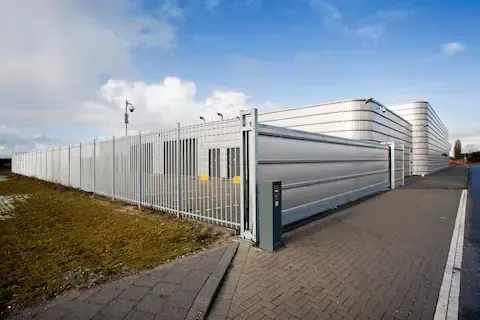
High-security perimeter fencing with anti-climb features and layered protection systems designed for border region properties requiring enhanced security measures.
Frequently Asked Questions
Fence Installation can be complex, and we’re here to provide answers to common questions. Here are some frequently asked questions from our clients.
Frequently Asked Questions about Fence Contractor
What fence materials last longest in Brownsville's climate?
Brownsville's subtropical climate with high humidity, salt air exposure, and hurricane risk makes material selection critical. Vinyl fencing with UV stabilizers performs best for maintenance-free longevity, typically 25+ years. Aluminum and powder-coated wrought iron last 20+ years with minimal maintenance. Pressure-treated wood lasts 12-15 years but requires annual sealing. Cedar weathers naturally but typically needs replacement within 10-12 years. Chain link longevity depends on coating—vinyl-coated lasts 15-20 years while galvanized may rust within 5-7 years in coastal zones. For properties within 5 miles of the Gulf, upgrade all materials to marine-grade specifications.
Do I need a permit to install a fence in Brownsville?
Most fence installations in Brownsville city limits require building permits. Residential fences over 6 feet always require permits; fences under 6 feet typically don't need permits in rear/side yards but do need permits in front yards. Commercial and industrial fencing always requires permits regardless of height. Properties in historic districts need additional architectural review. Properties outside city limits in unincorporated Cameron County generally don't require permits but must still comply with setback requirements. HOA approvals may be required separate from city permits. We handle all permit applications and ensure installations meet current codes including wind load requirements and setback regulations.
How deep do fence posts need to be in Cameron County?
Cameron County building codes require fence posts embedded minimum 1/3 of above-ground height, which typically means 24-30 inches for standard 6-foot residential fencing. However, hurricane wind load requirements effectively mandate 36 inches minimum for most installations. Coastal zone properties need 42-inch embedment for enhanced wind resistance. Sandy soils require deeper posts than clay—we adjust based on soil testing. Posts must be set in concrete in all cases; backfill-only installations fail rapidly during wind events. For commercial security fencing or gates, posts often require 48-inch depth with larger diameter concrete footings to resist lateral loads.
What's the best fence for hurricane protection?
No fence completely protects property during major hurricanes, but engineering and material choices significantly affect survival rates. Chain link performs best—wind passes through mesh, and proper installation with reinforced posts withstands Category 3 winds. Wrought iron picket fencing with adequate spacing allows wind passage while maintaining security. Privacy fencing creates maximum wind load—shadow-box or board-on-board designs allowing some wind passage survive better than solid panels. Vinyl fencing is lightest and most likely to blow away without reinforced posts. For hurricane-prone areas, we recommend installing fences with removable panels in sections facing prevailing wind direction, allowing deliberate removal before major storms to prevent complete destruction.
How much does fence installation cost in Brownsville?
Brownsville fence installation costs vary significantly by material, height, and site conditions. Chain link typically runs $12-18 per linear foot installed; wood privacy fencing $20-30 per foot; vinyl privacy $25-40 per foot; wrought iron $30-60+ per foot depending on design complexity. These prices include concrete post installation meeting Cameron County wind load requirements. Add 20-30% for coastal zone installations requiring upgraded corrosion protection. Difficult access, rocky soil requiring augering, and removal of existing fencing add to costs. Automated gates add $2,500-6,000 depending on size and access control features. We provide detailed written estimates with material specifications and installation scope.
Can I install a fence on the property line?
Texas property law generally allows fencing on property lines, but practical and legal considerations require careful attention. You must first confirm actual property line location through survey—fencing based on assumptions often leads to disputes. If adjacent property owner agrees to share cost, a boundary line fence becomes jointly owned and both parties are responsible for maintenance. Without written agreement, fence becomes your sole responsibility even if on the line. Some municipalities require minimum setbacks (commonly 2-4 inches) from property lines. Best practice: obtain survey confirming boundaries, discuss fence placement with neighbors before installation, and consider setting fence 6-12 inches inside your property line to avoid any disputes. We coordinate with surveyors and help navigate neighbor discussions.
Frequently Asked Questions about Vinyl Fence Installation
Does vinyl fencing crack in Texas heat?
Low-quality vinyl fencing does crack in extreme heat, but properly formulated commercial-grade vinyl withstands South Texas temperatures when correctly installed. The key is UV stabilizers—titanium dioxide additive prevents polymer breakdown from intense sunshine. Virgin vinyl (not recycled) maintains flexibility across temperature range. Impact modifiers added during manufacturing prevent brittleness as material ages. Poor installation causes more cracking than heat itself—over-tightening fasteners restricts natural thermal expansion, creating stress fractures. Gates are particularly vulnerable—hinges must accommodate dimensional changes or binding creates cracks. We install only UV-stabilized virgin vinyl rated for coastal Florida and South Texas (highest UV category), use stainless steel hardware, and incorporate expansion gaps in all horizontal runs. White and light colors perform best—dark colors absorb more heat, increasing expansion/contraction cycles.
How does vinyl compare to wood for South Texas?
Vinyl vs wood comparison in Brownsville heavily favors vinyl for total cost of ownership despite higher initial price. Vinyl costs $25-40 per foot installed vs wood at $20-30, but requires zero maintenance—no painting, staining, sealing, or rot repairs. Wood requires annual maintenance costing $200-500 in materials plus labor, and replacement at 10-12 years when rot damage accumulates. Vinyl lasts 25+ years maintenance-free if properly installed with UV stabilizers. Over 15 years, total cost including maintenance makes vinyl significantly cheaper. Vinyl also provides consistent appearance while wood weathers, grays, and develops uneven color. However, wood offers traditional aesthetic some prefer and better wind resistance in hurricane events—vinyl can blow away entirely where wood fence might survive with repairable damage. For properties with good drainage away from house, vinyl eliminates wood's rot problems that develop in standing water.
Will vinyl fence survive Cameron County hurricanes?
Vinyl fencing is most vulnerable fence type during hurricanes due to lightweight construction and solid panel design creating maximum wind load. Standard vinyl privacy fence becomes projectile in sustained winds over 80 mph. However, engineering upgrades dramatically improve survival: 6-foot post spacing instead of 8-foot, 5-inch posts instead of 4-inch, aluminum reinforcement inserts in horizontal rails, and proper embedment depth (36 inches minimum in concrete). Shadow-box designs or lattice-top panels reduce wind loading by allowing partial air passage while maintaining privacy. For coastal Cameron County properties, we recommend removable panel sections in windward direction—panels lift out in 30 minutes before hurricane arrival, eliminating destruction risk. After storm, panels reinstall quickly. Alternative approach: use vinyl only in protected locations (side yards behind house) and choose chain link or wrought iron for exposed areas facing prevailing wind.
Does vinyl fencing need maintenance in Brownsville?
Vinyl fencing requires minimal maintenance but isn't completely maintenance-free despite marketing claims. Occasional washing (1-2 times yearly) removes dirt, pollen, and mildew that accumulate in South Texas humidity. Garden hose with soap and scrub brush handles most cleaning—avoid pressure washers above 1,500 PSI which can damage vinyl surface. Mildew growth occurs in shaded areas with poor airflow; diluted bleach solution removes it easily. Inspect annually for cracks, loose fasteners, or gate hardware wear. Hardware lubrication prevents binding—especially critical for gates experiencing thermal expansion. Check posts for plumb—ground settling can tilt sections. Retighten any loose screws but avoid over-tightening which restricts expansion and causes cracks. Trim vegetation maintaining 12-inch clearance from fence—plants growing against vinyl trap moisture and accelerate mildew. Overall maintenance time is under 2 hours annually compared to 8-12 hours for wood fence sealing and repair.
Does vinyl fencing crack or fade in Brownsville's sun?
Quality vinyl with 3 to 5 percent UV stabilizers and a co-extruded cap layer resists Brownsville's 233 sunny days. Cheaper single-extrusion vinyl chalks and fades within a few years - we install UV-grade product only. Call (956) 275-8914 for a free on-site estimate.
How deep do you set vinyl fence posts for wind uplift?
Vinyl is lightweight, so we set posts a minimum of 3 feet in concrete and often add internal post reinforcement. This is what prevents the wind uplift that pulls under-set vinyl panels loose in Gulf storms. Call (956) 275-8914 for a free on-site estimate.
How long does vinyl fencing last in South Texas?
Quality UV-resistant vinyl holds structural integrity 25 to 30 years in Brownsville, though darker colors may show some fading in 5 to 7 years. The coastal humidity actually helps vinyl stay flexible. Call (956) 275-8914 for a free on-site estimate.
What vinyl fence colors hold up best in the heat?
White and light tones show the best long-term color stability under Brownsville UV; darker browns and grays look great but fade sooner. We walk you through the tradeoff before you order. Call (956) 275-8914 for a free on-site estimate.
Is vinyl a good choice for a coastal property?
Yes - vinyl does not corrode, which is a real advantage near the Gulf where salt air attacks metal fencing. Just be sure the posts are properly reinforced and embedded for wind, which we handle. Call (956) 275-8914 for a free on-site estimate.
Does vinyl fencing need sealing or painting?
No. Vinyl needs only occasional cleaning with mild soap and water - no staining, sealing, or painting. That low maintenance is the main reason Brownsville homeowners choose it over wood. Call (956) 275-8914 for a free on-site estimate.
Request Vinyl Fencing Quote
What Our Satisfied Clients Have to Say About Brownsville Fence Contractors
We pride ourselves on delivering great results and experiences for each client. Hear directly from home and business owners who’ve trusted us with their Fence Installation needs.

After Hurricane Hanna destroyed our old wood fence, we needed something that would survive the next storm. They installed reinforced vinyl with proper embedment and engineering that gives us confidence. Two years later through several severe thunderstorms, the fence hasn't moved an inch. Finally have fencing built for South Texas reality.
Robert M., Los Fresnos
Our Port facility needed security fencing meeting federal MARSEC requirements with specific anti-climb features and integration with existing surveillance. Their team understood the regulations, coordinated with port authority throughout installation, and delivered exactly what our operations required without impacting 24/7 cargo handling schedule.
Jennifer K., Port of Brownsville Operations Manager
We've used them for three different properties—residential privacy fence, ranch cattle fencing, and commercial chain link at our warehouse. Every project finished on time, exactly as estimated, with attention to details that matter in this climate. Hard to find contractors who understand Rio Grande Valley conditions and deliver accordingly. Highly recommend their work.
David R., Rancho Viejo
The Trusted Fence Installation Expert Near You
Ready to hear more about expert services at Brownsville Fence Contractors?
Contact us today to receive a detailed, no-obligation quote.
More About Vinyl Fence Installation
We share helpful articles about to answer common questions, explain options, and give a better sense of what to expect. Whether you’re taking care of your own home or responsible for a larger property, these resources are meant to make planning and decision-making a little easier.

Serving Brownsville, Harlingen, Raymondville and the RGV
Mon-Fri, 8am-6pm
