Security Fence Installation Brownsville TX
High-Security Perimeter Fencing Cameron County
Brownsville's position on the international border creates security concerns that drive demand for enhanced perimeter protection beyond standard residential fencing. Our security installations serve government facilities, commercial properties with valuable inventory, and residential estates requiring layered security approaches. We design integrated systems that combine physical barriers, detection technology, and surveillance infrastructure to create comprehensive protection appropriate to threat assessment and budget.
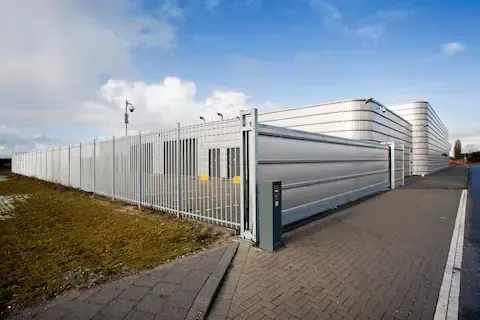
High-security perimeter systems with anti-climb features and layered protection for border region properties.
What's Included in our Security Fence Installation service?
Anti-Climb Specifications Barrier Design
Security fencing must prevent both climbing and cutting attacks. We install chain link with mesh sizes under 2 inches that prevent toe holds, add 45-degree barbed wire or razor wire top guards that exceed 8 feet total height, and use heavy gauge fabric (minimum 9-gauge) that resists bolt cutters. For high-value properties, we incorporate anti-climb paint or spike strips at vulnerable points and install fencing with minimal ground clearance to prevent crawl-under breaches. Wrought iron security fencing features spear-point pickets spaced tight enough to prevent body passage, welded construction that eliminates removal of individual pickets, and integration with intrusion detection sensors. For government facilities and critical infrastructure, we provide ASTM F2781 crash-rated vehicle barriers integrated with perimeter fencing.
Layered Security Detection Integration
Effective security fencing is one component in layered protection systems. We coordinate fence installation with lighting placement (overlapping coverage eliminating shadows), camera mounting (providing complete perimeter visibility), and intrusion detection systems ranging from simple motion sensors to fiber optic cable detecting cutting or climbing. For commercial properties, we install separate vehicle and pedestrian entries with appropriate access control for each, design sally port configurations that trap unauthorized vehicles between two controlled gates, and coordinate fence placement to maximize building surveillance camera effectiveness. Residential estate security incorporates landscape design that eliminates concealment near fence perimeter, lighting triggered by motion detection, and fence designs with clear interior visibility for property patrols.
CBP Federal Facility Standards
Properties hosting federal law enforcement operations or located near CBP facilities must meet specific security standards. This includes perimeter setbacks creating controlled zones, fence heights meeting agency requirements (typically 8-10 feet), anti-climb features, integration with federal access control systems, and coordination with agency security personnel during design. We maintain clearances for contractors working on federal properties and understand requirements for different facility types from office buildings to vehicle inspection stations to detention facilities. For properties adjacent to federal installations, we coordinate fence placement to avoid interference with surveillance systems and maintain required setbacks from controlled perimeters.
Serving Brownsville and Surrounding Cameron County Communities
Quality Fence Installation Throughout the Rio Grande Valley
When you need professional fence installation in the Rio Grande Valley, we bring Cameron County's most trusted craftsmanship to your property. From coastal Los Fresnos to agricultural La Feria, our team understands the unique demands of South Texas fencing—hurricane wind loads, subtropical humidity, salt air corrosion, and the aesthetic preferences that define border region properties.
Proudly serving Brownsville, Rancho Viejo, Los Fresnos, Harlingen,
Port Isabel and San Benito for 10+ years.
Comprehensive Fence Installation Services in Brownsville
Tailored to Your Needs
Our comprehensive fence installation services address every property type across Brownsville and Cameron County. Whether you're securing a Port of Brownsville industrial facility, enclosing a residential lot near the international bridge, protecting ranch land along the Rio Grande floodplain, or adding curb appeal to a historic downtown property, we deliver installations built for extreme South Texas conditions and designed to last through hurricane seasons.
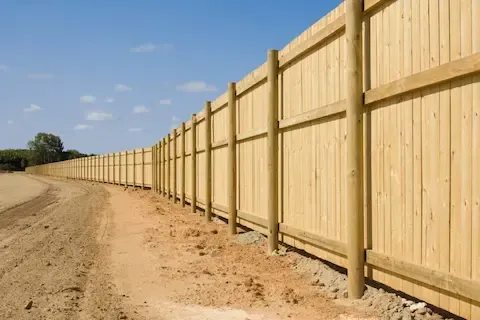
Expert wood fence installation using hurricane-rated construction and humidity-resistant materials selected specifically for Rio Grande Valley climate conditions.
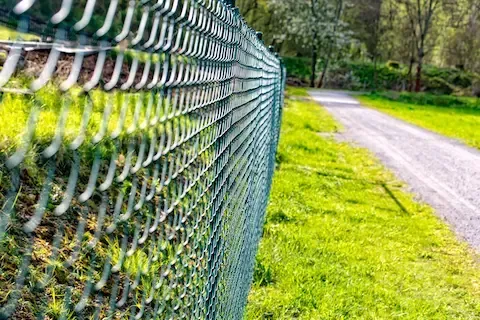
Commercial-grade chain link fence installation for industrial properties, securing facilities with corrosion-resistant materials engineered for coastal salt air exposure.
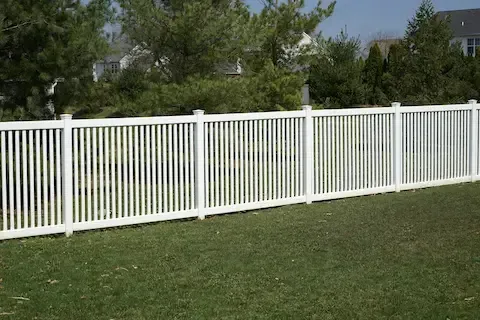
Low-maintenance vinyl fence installation offering superior UV resistance and thermal expansion engineering for extreme South Texas sun exposure and temperature swings.
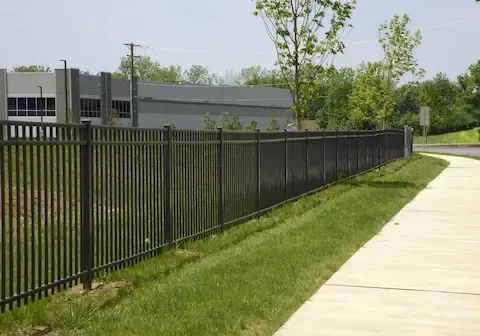
Custom wrought iron fence installation featuring powder-coated corrosion protection and traditional border region architectural styling for elegant property perimeters.
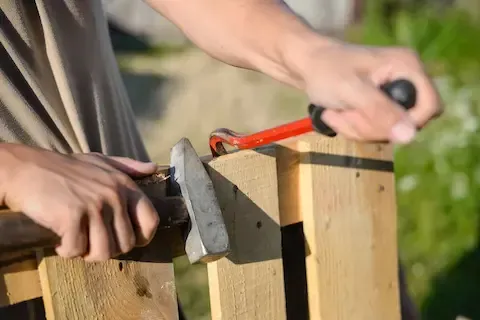
Emergency fence repair services addressing hurricane damage, wood rot, corrosion failure, and structural issues with same-day response throughout Cameron County.
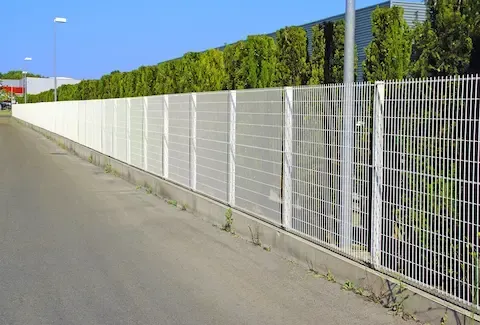
Industrial-grade commercial fence installation for warehouses, manufacturing facilities, and Port of Brownsville properties requiring federal security compliance.
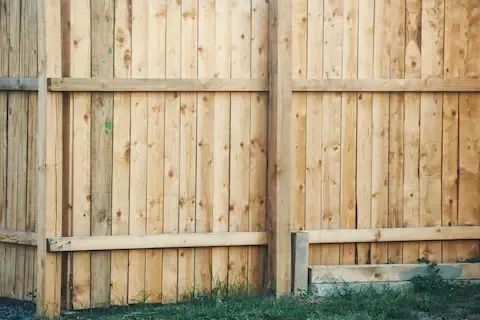
Solid privacy fence installation providing complete visual screening with wind-resistant design engineered for Cameron County hurricane exposure and building codes.
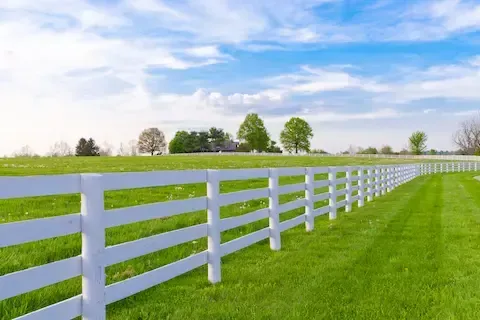
Agricultural fencing installation for Cameron County ranches and farms, featuring livestock containment systems and property boundary fencing built for South Texas conditions.
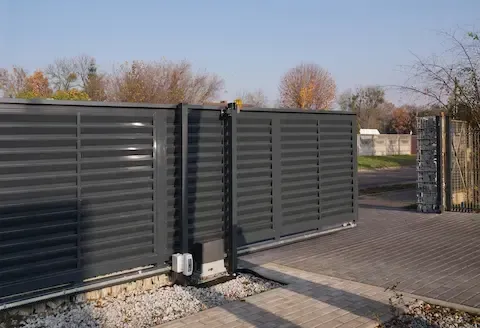
Automated gate system installation with hurricane-rated motors and salt-air corrosion protection for residential and commercial properties throughout Cameron County.
High-security perimeter fencing with anti-climb features and layered protection systems designed for border region properties requiring enhanced security measures.
Frequently Asked Questions
Fence Installation can be complex, and we’re here to provide answers to common questions. Here are some frequently asked questions from our clients.
Frequently Asked Questions about Fence Contractor
What fence materials last longest in Brownsville's climate?
Brownsville's subtropical climate with high humidity, salt air exposure, and hurricane risk makes material selection critical. Vinyl fencing with UV stabilizers performs best for maintenance-free longevity, typically 25+ years. Aluminum and powder-coated wrought iron last 20+ years with minimal maintenance. Pressure-treated wood lasts 12-15 years but requires annual sealing. Cedar weathers naturally but typically needs replacement within 10-12 years. Chain link longevity depends on coating—vinyl-coated lasts 15-20 years while galvanized may rust within 5-7 years in coastal zones. For properties within 5 miles of the Gulf, upgrade all materials to marine-grade specifications.
Do I need a permit to install a fence in Brownsville?
Most fence installations in Brownsville city limits require building permits. Residential fences over 6 feet always require permits; fences under 6 feet typically don't need permits in rear/side yards but do need permits in front yards. Commercial and industrial fencing always requires permits regardless of height. Properties in historic districts need additional architectural review. Properties outside city limits in unincorporated Cameron County generally don't require permits but must still comply with setback requirements. HOA approvals may be required separate from city permits. We handle all permit applications and ensure installations meet current codes including wind load requirements and setback regulations.
How deep do fence posts need to be in Cameron County?
Cameron County building codes require fence posts embedded minimum 1/3 of above-ground height, which typically means 24-30 inches for standard 6-foot residential fencing. However, hurricane wind load requirements effectively mandate 36 inches minimum for most installations. Coastal zone properties need 42-inch embedment for enhanced wind resistance. Sandy soils require deeper posts than clay—we adjust based on soil testing. Posts must be set in concrete in all cases; backfill-only installations fail rapidly during wind events. For commercial security fencing or gates, posts often require 48-inch depth with larger diameter concrete footings to resist lateral loads.
What's the best fence for hurricane protection?
No fence completely protects property during major hurricanes, but engineering and material choices significantly affect survival rates. Chain link performs best—wind passes through mesh, and proper installation with reinforced posts withstands Category 3 winds. Wrought iron picket fencing with adequate spacing allows wind passage while maintaining security. Privacy fencing creates maximum wind load—shadow-box or board-on-board designs allowing some wind passage survive better than solid panels. Vinyl fencing is lightest and most likely to blow away without reinforced posts. For hurricane-prone areas, we recommend installing fences with removable panels in sections facing prevailing wind direction, allowing deliberate removal before major storms to prevent complete destruction.
How much does fence installation cost in Brownsville?
Brownsville fence installation costs vary significantly by material, height, and site conditions. Chain link typically runs $12-18 per linear foot installed; wood privacy fencing $20-30 per foot; vinyl privacy $25-40 per foot; wrought iron $30-60+ per foot depending on design complexity. These prices include concrete post installation meeting Cameron County wind load requirements. Add 20-30% for coastal zone installations requiring upgraded corrosion protection. Difficult access, rocky soil requiring augering, and removal of existing fencing add to costs. Automated gates add $2,500-6,000 depending on size and access control features. We provide detailed written estimates with material specifications and installation scope.
Can I install a fence on the property line?
Texas property law generally allows fencing on property lines, but practical and legal considerations require careful attention. You must first confirm actual property line location through survey—fencing based on assumptions often leads to disputes. If adjacent property owner agrees to share cost, a boundary line fence becomes jointly owned and both parties are responsible for maintenance. Without written agreement, fence becomes your sole responsibility even if on the line. Some municipalities require minimum setbacks (commonly 2-4 inches) from property lines. Best practice: obtain survey confirming boundaries, discuss fence placement with neighbors before installation, and consider setting fence 6-12 inches inside your property line to avoid any disputes. We coordinate with surveyors and help navigate neighbor discussions.
Frequently Asked Questions about Security Fence Installation
What height security fence do I need in Brownsville?
Security fence height requirements in Brownsville depend on property type and security goals. Residential properties face 6-foot rear yard maximum under standard codes—higher fencing requires variance justifying security needs. Commercial properties typically use 8-foot chain link with 3-strand barbed wire (9 feet total height) providing substantial barrier without requiring special approval. High-security applications (CBP facilities, properties with repeated break-in problems, sites storing high-value inventory) may justify 10-12 foot fencing with razor wire top guard—requires demonstrating specific security threat. Research shows diminishing returns above 8 feet with anti-climb features—determined intruders scale even 12-foot barriers. More effective approach combines 8-foot fence with anti-climb top guard (barbed/razor wire), intrusion detection sensors, surveillance cameras, and lighting eliminating shadows. For Port of Brownsville facilities and federal properties, specific height requirements are mandated by security level. We assess your property's actual threats and recommend appropriate height avoiding unnecessary expense while achieving security goals.
Does security fencing prevent all break-ins?
Security fencing reduces break-in risk but no fence prevents 100% of determined intrusion attempts. Well-designed security fencing creates layers of deterrence and delay. Perimeter fence visible from street deters casual/opportunistic criminals who simply move to easier targets—this eliminates perhaps 70% of potential break-ins. Anti-climb features (barbed wire, tight mesh, no horizontal rails providing footholds) delay intrusion attempts 5-15 minutes depending on intruder skill and tools available. This delay is critical—it's time window for detection through sensors, cameras, or patrol. Most effective security approach combines physical barriers (fence), detection technology (motion sensors, cameras), and response capability (security patrol, police response). Fence alone without detection/response simply delays intruder without stopping them. For high-value properties, layered security approach: perimeter fence with sensors, internal fence creating additional barrier around critical assets, lighting eliminating concealment, and monitored surveillance providing immediate detection. Fence is foundation—not complete solution—for comprehensive property security.
Can I add razor wire to my property fence?
Razor wire addition to property fencing is legal in Texas but local Brownsville ordinances may restrict residential use and potential liability concerns require careful consideration. Commercial and industrial properties face few restrictions—razor wire common on warehouses, storage facilities, and properties with repeated theft problems. Residential properties in Brownsville typically can't install razor wire on street-facing fences due to aesthetic ordinances and injury liability concerns. Rear/side yard installation may be permitted but verify with city code enforcement before installation. Legal liability exposure exists if someone injured by razor wire can demonstrate unnecessary danger—courts may find homeowner negligent if reasonable security could have been achieved without injury-causing barriers. Practical considerations: razor wire creates maintenance hazards for property owner performing landscape work, creates negative aesthetic perception, and may impact property values in residential neighborhoods. Better residential approach: barbed wire (less severe than razor), anti-climb fence design, intrusion detection, and surveillance cameras achieving security without injury risks. For commercial properties with documented theft problems, razor wire is defensible and effective deterrent.
How much does high-security fencing cost?
High-security fencing costs significantly more than standard installations due to upgraded materials and enhanced construction methods. Eight-foot commercial-grade chain link with 3-strand barbed wire outrigger runs $18-28 per linear foot installed—includes heavier gauge fabric (9-gauge minimum), reinforced posts, bottom tension wire, and professional-grade installation meeting wind load requirements. Add intrusion detection sensors ($2,000-5,000 for typical commercial perimeter), surveillance camera integration ($3,000-8,000 for 4-8 cameras with recording system), and specialized lighting ($1,500-4,000), total security system approaches $25,000-40,000 for standard commercial property. Residential estate security using ornamental iron with anti-climb features, automated gates with access control, and integrated surveillance runs $40,000-80,000+ depending on perimeter size and system sophistication. Ongoing costs include monitoring service if remote surveillance used ($30-60 monthly), annual maintenance on automated components, and periodic security system updates. Most expensive approach: vehicle-rated barriers and bollards preventing crash-through attacks add $15,000-30,000 for reinforced gate systems. For properties with demonstrated security threats, investment justified by loss prevention and insurance premium reductions—consult with security professionals assessing actual risk before specifying system components.
What height security fence do I need in Brownsville?
It depends on property type and threat level - residential security often runs 6 to 8 feet, commercial and Port-adjacent higher with anti-climb toppers. We assess the site and recommend a spec. Call (956) 275-8914 for a free on-site estimate.
How do you prevent climbing and cutting on a security fence?
We install mesh under 2 inches to deny toe holds, add 45-degree barbed or razor extensions where allowed, and use heavier gauge to resist cutting. The combination is what actually slows an intruder. Call (956) 275-8914 for a free on-site estimate.
Can I add razor wire to my property fence?
Razor and concertina wire are permitted in certain Brownsville industrial and commercial zones but restricted in residential areas. We confirm what your zoning allows before installing. Call (956) 275-8914 for a free on-site estimate.
Do you integrate security fencing with lighting and cameras?
Yes. Effective security fencing is one layer - we coordinate fence, overlapping lighting, and camera sight lines so there are no dark gaps or blind spots along the perimeter. Call (956) 275-8914 for a free on-site estimate.
What security fencing meets federal requirements near Brownsville?
Properties hosting federal operations or near CBP facilities face specific setback and construction standards. We build to those requirements and verify current specs with the authority first. Call (956) 275-8914 for a free on-site estimate.
How much does high-security fencing cost in Brownsville?
Cost scales with height, gauge, topper, and access control, so we price it per site after a walk-through rather than a flat rate. We give you a written, itemized estimate. Call (956) 275-8914 for a free on-site estimate.
Get Security Fence Quote
What Our Satisfied Clients Have to Say About Brownsville Fence Contractors
We pride ourselves on delivering great results and experiences for each client. Hear directly from home and business owners who’ve trusted us with their Fence Installation needs.

After Hurricane Hanna destroyed our old wood fence, we needed something that would survive the next storm. They installed reinforced vinyl with proper embedment and engineering that gives us confidence. Two years later through several severe thunderstorms, the fence hasn't moved an inch. Finally have fencing built for South Texas reality.
Robert M., Los Fresnos
Our Port facility needed security fencing meeting federal MARSEC requirements with specific anti-climb features and integration with existing surveillance. Their team understood the regulations, coordinated with port authority throughout installation, and delivered exactly what our operations required without impacting 24/7 cargo handling schedule.
Jennifer K., Port of Brownsville Operations Manager
We've used them for three different properties—residential privacy fence, ranch cattle fencing, and commercial chain link at our warehouse. Every project finished on time, exactly as estimated, with attention to details that matter in this climate. Hard to find contractors who understand Rio Grande Valley conditions and deliver accordingly. Highly recommend their work.
David R., Rancho Viejo
The Trusted Fence Installation Expert Near You
Ready to hear more about expert services at Brownsville Fence Contractors?
Contact us today to receive a detailed, no-obligation quote.
More About Security Fence Installation
We share helpful articles about to answer common questions, explain options, and give a better sense of what to expect. Whether you’re taking care of your own home or responsible for a larger property, these resources are meant to make planning and decision-making a little easier.

Serving Brownsville, Harlingen, Raymondville and the RGV
Mon-Fri, 8am-6pm
