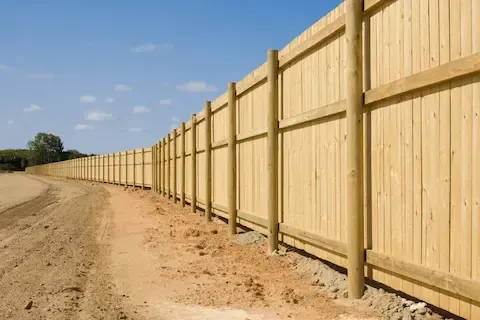
Wood Fence Stain Schedule for Brownsville Gulf Humidity
In Brownsville's Gulf Coast climate, wood fences need staining or resealing every 12 to 18 months. High humidity, salt air from the Gulf of Mexico, and intense UV exposure break down protective coatings faster than in drier regions. Skipping a scheduled application leads to graying, cracking, and early board rot. Penetrating oil-based stains outperform film-forming sealers in humid conditions because they flex with the wood rather than peeling off the surface. Staying on a consistent maintenance schedule is the single most effective way to extend the life of a wood fence in the Rio Grande Valley.
How Often Should You Stain a Wood Fence in Brownsville?
Plan to restain or reseal your fence every 12 to 18 months in Brownsville. The combination of Gulf humidity, salt-laden air, and summer heat cycles accelerates moisture absorption into bare wood. A fence that was stained two years ago and left unattended in this climate will show visible gray weathering, surface checking, and early signs of mold growth. Do a simple water bead test annually: if water soaks into the wood rather than beading on the surface, the protective coating has failed and it's time to reapply. Do not wait for visible damage before acting.
What Type of Stain Works Best in Gulf Humidity?
Penetrating oil-based semi-transparent stains are the most reliable choice for Brownsville conditions. They soak into the wood grain rather than forming a film on top, which means they don't blister or peel when moisture pushes through the boards from the inside. Look for products with added mildewcide and UV inhibitors, as both are essential in this climate. Film-forming solid stains and latex-based sealers tend to trap moisture under the coating, which causes premature peeling and can accelerate the decay they're meant to prevent. Water-repellent preservatives without color are also useful as a base coat on new wood before a stain is applied.
How Do You Prepare a Fence Before Staining?
Surface preparation determines how long the stain lasts. Before applying any product, clean the fence thoroughly with a wood brightener or oxygen bleach solution to remove mold, mildew, and tannin stains common in the Brownsville area. Allow the wood to dry completely — at least 48 hours after washing, and longer during humid stretches. Sand rough or splintered surfaces lightly to open the grain. Check for loose nails or fasteners and reset them before coating. If you're working with a Wood Fence Installation that used pressure-treated pine, confirm the wood has dried down enough to accept stain — fresh treated lumber often needs 30 to 60 days before it will absorb product properly.
Does Salt Air from the Gulf Affect Wood Faster?
Yes. Properties within several miles of the Gulf of Mexico or the Brownsville Ship Channel are exposed to salt-laden moisture that accelerates both corrosion and wood degradation. Salt particles suspended in coastal air settle on fence surfaces and draw additional moisture into the wood grain. This is why fences in neighborhoods near Boca Chica Boulevard or South Padre Island Drive often show weathering symptoms earlier than those further inland. If your property falls in a coastal exposure zone, move toward the 12-month end of your resealing schedule rather than waiting the full 18 months. The difference in board condition at year two can be significant.
What Are the Signs You've Waited Too Long to Restain?
Gray or silver discoloration across the boards is the first visible sign that UV exposure has degraded the surface. Black staining in the grain indicates mold or mildew colonization, which happens when unsealed wood absorbs humidity over extended periods. Surface checking — small cracks running along the grain — shows the wood is drying and wetting repeatedly without protection. Soft spots or spongy sections near the base of boards signal active rot. At that stage, staining alone won't restore the wood. You'll need to replace affected boards before recoating. For more context on how long boards last under local conditions, read these pine fence lifespan details specific to the Brownsville climate.
Can You Stain a Fence Year-Round in Brownsville?
You can stain during most months in Brownsville, but timing matters for best adhesion. Avoid application during the hottest part of summer days when surface temperatures exceed 90°F — the product dries too fast to penetrate properly. Early morning or late afternoon in spring and fall offer ideal conditions. Avoid staining immediately before or after rain, and check the forecast for at least 24 hours of dry weather after application. The mild Brownsville winters are actually a reasonable time to stain, provided temperatures stay above 50°F and humidity isn't spiking from a Gulf weather system.
