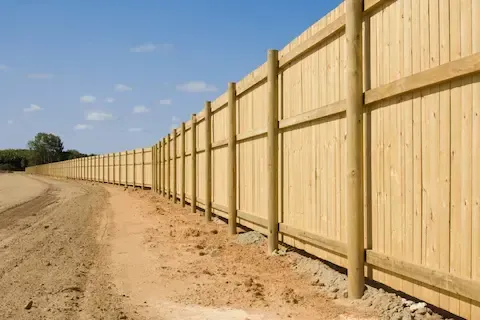
Spring Wood Fence Repairs After Brownsville Storm Season
Storm season along the Texas Gulf Coast is hard on wood fences. Between late-summer hurricanes, tropical depressions, and the scattered severe thunderstorms that roll through Cameron County from spring into early fall, a wood fence in Brownsville takes a beating that most property owners don't fully assess until they're standing in the backyard noticing something is off. A leaning post, a missing picket, a section that pivoted on its anchor — these are common findings once the weather settles and you finally have a calm weekend to walk the fence line.
Why Spring Is the Right Time to Assess Storm Damage
Brownsville winters are mild, but storm season runs long. By the time March and April arrive, there's often accumulated damage from multiple weather events that haven't been addressed. Spring is the practical repair window because temperatures are manageable for outdoor labor, the ground hasn't yet reached peak summer hardness, and any wood that absorbed moisture over the wet season can be inspected while conditions are still revealing. Waiting until summer means working in extreme heat and risking further structural failure during the next storm cycle before repairs are made.
Walking your fence line in early spring with a critical eye is something every Brownsville homeowner should build into their annual routine. Look for posts that rock when you push them, panels that have shifted out of vertical, pickets with cracking or splitting at attachment points, and rails that have pulled away from posts. Each of these has a repair approach, and catching them early keeps costs manageable.
Post Stability Problems in Brownsville Clay Soil
The dominant soil type across much of Brownsville and the surrounding Rio Grande Valley is expansive clay. During dry conditions it contracts. During the wet conditions that accompany storm events it expands. This repeated cycle works against fence post footings in a way that sandy or loamy soil does not. A post that was set properly several years ago can gradually lose its grip in clay as the ground heaves and settles through enough storm seasons.
After a significant wind event, posts that were already borderline unstable often fail completely or shift to an angle that compromises the entire panel. Resetting a post in clay soil typically means excavating below the original footing depth, clearing out the deteriorated concrete or compacted earth, and pouring fresh concrete that extends deep enough to stay below the active zone where clay movement is most pronounced. In Brownsville that generally means going at least 36 inches, sometimes deeper depending on the specific site conditions.
If you're dealing with multiple leaning posts across a fence run, the scope of the repair starts to approach partial fence replacement rather than isolated fixes. At that point, it's worth evaluating whether spot repairs or a full section reset makes more sense economically. For professional assessment and structural repairs, Wood Fence Installation services in Brownsville can evaluate post condition and recommend the most cost-effective approach for your specific fence.
Panel Resets and Rail Repair After Wind Loads
Wind damage often shows up not in snapped pickets but in racked panels — sections of fence that have been pushed sideways by sustained wind loads so the entire panel leans or twists out of square. A racked panel may look intact at first glance but won't hold up structurally. The horizontal rails that span between posts take on stress they weren't designed to handle, and over time the panel continues to degrade even without additional wind events.
Resetting a racked panel starts with determining whether the posts are still plumb. If the posts held and the panel itself shifted, the panel can sometimes be squared and refastened with new hardware. If the posts moved with the panel, the fix is more involved and requires post work first. Ring-shank nails or screws should replace any original fasteners that pulled out during the storm, and rails that cracked or split at the post attachment point need full replacement rather than reinforcement.
Picket Replacement and Wood Selection in a Coastal Climate
Brownsville's proximity to the coast means wood fences here face salt air, humidity, and UV intensity that accelerates deterioration compared to inland installations. When you're replacing individual pickets after storm damage, the wood species and treatment level you choose matter for longevity. Pressure-treated pine rated for ground contact is standard for posts, but for pickets and rails, cedar holds up better to the humidity and is more resistant to checking and splitting than untreated pine in this climate.
Replacing only damaged pickets on an older fence often results in a visible mismatch as new wood weathers differently from existing wood. If the fence will be stained or painted, plan to finish the entire fence run after repairs are complete rather than spot-finishing only new material. A consistent stain schedule walkthrough will help you understand how often to refinish in a Brownsville coastal environment and what products hold up to the conditions here.
Local Permitting Considerations for Storm Repairs
Most fence repairs in Brownsville that involve like-for-like replacement of damaged sections don't require a permit from the City of Brownsville Development Services Department. However, if storm damage requires replacing posts in a way that alters fence height or if you're rebuilding a section along a corner lot where sight-line restrictions apply, it's worth confirming with the city before work begins. Properties in certain neighborhoods or HOA-governed areas may also have additional requirements around material type and fence height that should be verified before material is purchased.
Timing Repairs Before the Next Storm Cycle
The Atlantic hurricane season officially runs from June through November, and the Gulf Coast sees meaningful tropical activity throughout that window. That gives Brownsville homeowners roughly a three to four month window between when spring conditions become workable and when the next serious storm threat arrives. Using that window efficiently — assessing damage in March, completing repairs in April and May, and finishing any staining or sealing before summer heat peaks — puts your fence in the strongest possible position before conditions get challenging again.
A wood fence that survived one storm season in compromised condition is not guaranteed to survive the next. Brownsville's storm exposure is real and consistent, and the difference between a fence that holds and one that fails in high wind often comes down to whether post footings are solid and rail connections are sound. Spring repairs aren't cosmetic — they're structural maintenance that protects both the fence and whatever the fence is protecting.
