Pre-Hurricane Commercial Fence Audits in Brownsville TX
Hurricane season along the Texas Gulf Coast is not a distant threat for Brownsville commercial property owners — it is an annual operational reality. The stretch of South Texas coastline that includes Cameron County sits within one of the most active hurricane corridors in the country, and commercial fencing systems take a disproportionate share of storm damage when proper preparation is skipped. A pre-hurricane fence audit is not simply a checklist exercise. It is a systematic physical review of every structural component in your perimeter system before sustained winds and surge conditions arrive and remove your ability to respond.
Why Commercial Fence Systems Fail During Hurricanes
Most commercial fencing fails during hurricanes not because the material is poor quality but because connection points and load distribution were never evaluated under storm assumptions. Chain link fabric, welded wire panels, and ornamental steel all behave differently under sustained 100-plus mile-per-hour winds, but they share a common failure sequence: fabric or panel stress transfers to the rail, rail stress transfers to the post, and post stress transfers to the footing. If any one of those handoff points is compromised before the storm, the entire run is vulnerable. Brownsville's combination of wind exposure and storm surge potential from the Laguna Madre corridor means your fencing system faces both horizontal wind load and potential ground saturation that weakens footing embedment simultaneously.
What a Pre-Hurricane Audit Actually Covers
A thorough commercial hurricane fence prep audit in Brownsville goes well beyond walking the perimeter and looking for obvious damage. It starts with post footing verification. Terminal posts — corners, ends, and gate jamb posts — bear the highest load transfer during wind events and should be checked for concrete spalling, corrosion at the below-grade transition zone, and any visible lean that has developed since installation. Line posts along long runs should be checked for lateral wobble, which often indicates footing failure or soil migration that is invisible from the surface.
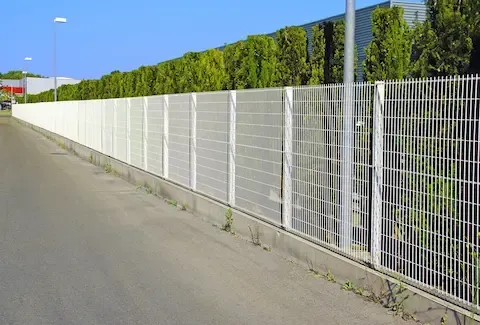
Panel attachment hardware is the next critical layer. Tension bands, brace bands, rail ends, and tie wire frequency on chain link systems should all be confirmed to current specifications. Panels that have lost attachment points along their height will billow under wind pressure and create a sail effect that accelerates failure of adjacent sections. For welded wire or ornamental panels, bracket connections and horizontal rail splices should be examined for corrosion, missing fasteners, or fatigue cracking, particularly at any points where panels have been field-cut or modified after original installation.
Gate systems require separate attention. Swing gates and slide gates both present structural challenges during hurricanes because they combine a large open panel area with moving mechanical components. Gate frames should be checked for weld integrity at the hinge and latch sides, and any accumulated rust along lower rail sections should be treated as a structural indicator, not merely cosmetic. If your facility uses Commercial Fence Installation grade electric gate operators, the pre-storm audit should include confirming that battery backup systems are functional, that manual release mechanisms can be operated without power, and that open-position stops are in place so a gate cannot be blown fully open and used as a lever against the entire gate frame.
Wind Exposure Mapping for Brownsville Commercial Sites
Brownsville falls within Wind Exposure Category D under ASCE 7 standards for properties within a mile of the open water boundary, and Exposure Category C for most inland commercial corridors. What this means practically is that your fence system design wind speed assumptions depend heavily on your specific site location relative to the Brownsville Ship Channel, the Port of Brownsville perimeter, and open unobstructed land south toward the Rio Grande. A warehouse fence inspection in Brownsville near the port district should be evaluated against different wind uplift assumptions than a fenced commercial lot three miles inland along Highway 77.
When conducting your audit, document whether the upwind terrain around your facility has changed since your fence was installed. New construction that opened previously sheltered corridors, removal of mature vegetation, or changes in adjacent parcel use can all shift the effective wind exposure your fence actually experiences during a storm, independent of what the original installation assumed.
Practical Repair Priorities Before Storm Season
Not every deficiency found during a pre-hurricane fence audit can be addressed before a storm arrives. Triage is a practical reality. The highest priority repairs are those that affect structural continuity — loose terminal posts, missing tension bands on long fabric runs, gate frame welds showing separation, and any section where the top rail has separated from post connections. These are the failures that cascade. A broken connection point becomes a lever arm under wind load, multiplying stress on adjacent hardware until sequential failure runs down the line.
Medium priority items include corrosion treatment, minor fabric patching, and gate hardware lubrication. Low priority items that can wait for post-storm general maintenance include cosmetic rust staining, minor post lean that has been stable over multiple seasons, and fence line vegetation management that is not actively pulling on hardware.
One often-overlooked element in Brownsville commercial settings is the storm preparation protocol for temporary fencing or construction perimeter systems on active job sites. These systems are inherently less robust and should either be dismantled before a named storm arrives or substantially reinforced with additional bracing and tie-down.
Coordinating Audits with Your Insurance Documentation
Cameron County commercial property owners increasingly use pre-season fence audit documentation as part of their storm loss preparation. Photographs and written condition records taken before a storm provide baseline evidence for insurance claims after damage occurs. If your facility has had fence repairs or modifications since the last major storm, updated documentation that reflects the current system condition protects you from disputes over pre-existing damage versus storm-caused damage.
Reviewing your warehouse perimeter walkthrough records from previous seasons alongside your current audit findings also helps identify whether certain sections of your fence are showing a pattern of recurring issues — an indicator that a more fundamental repair or replacement may be more cost-effective than repeated seasonal patching.
Timing Your Audit Relative to Storm Season
The Atlantic hurricane season runs June through November, with peak activity historically concentrated in August and September for South Texas. Completing a commercial fence audit in Brownsville before the end of May gives you maximum lead time to schedule repairs before contractor availability tightens as storm season progresses. Waiting until a named storm is tracking toward the Rio Grande Valley leaves you with limited options and no room to address anything beyond emergency bracing. The audit itself is the early action that keeps every subsequent decision manageable.
