Brownsville Industrial District Fence Code Compliance
Industrial properties in Brownsville operate under specific fencing requirements that go well beyond basic residential rules. Whether you manage a warehouse near the Port of Brownsville, a manufacturing facility along Highway 48, or a distribution center in the Los Tomates corridor, understanding the City of Brownsville's Unified Development Code provisions for commercial and industrial fencing is essential before you break ground on any perimeter project. Permit errors, non-compliant materials, or inadequate screening can trigger stop-work orders, fines, and costly reconstruction. This guide walks through the key code requirements, common compliance pitfalls, and practical steps for getting your industrial fence project approved without delays.
What the UDC Says About Industrial Fence Standards
The City of Brownsville's Unified Development Code Section 4.6.4 governs fencing and screening in commercial and industrial zones. For properties zoned Industrial Light (IL) or Industrial Heavy (IH), the code establishes distinct height allowances that differ from residential or general commercial properties. Industrial perimeter fences may be permitted up to eight feet in height along rear and side property lines, with specific provisions governing street-facing frontages where aesthetic and visibility standards apply.
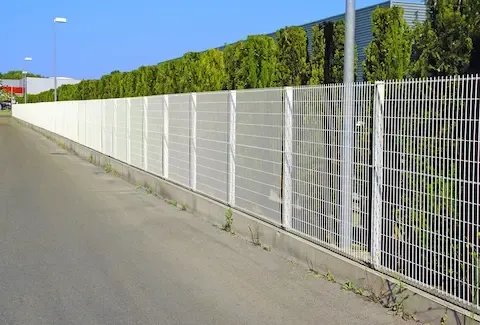
Materials matter under UDC 4.6.4. Chain-link fencing remains widely used in Brownsville's industrial areas and is code-compliant when properly installed, but properties adjacent to public rights-of-way may face additional requirements regarding opacity and appearance. Welded wire, ornamental steel, and concrete masonry walls each carry their own specifications under the code. Barbed wire and razor wire are permitted in industrial zones under limited conditions — typically restricted to the upper portion of a fence structure and not permitted to extend below a minimum height threshold, protecting both workers and the public.
When a Commercial Fence Permit Is Required in Brownsville
Many industrial property owners underestimate the permit threshold. In Brownsville, a commercial fence permit is required for virtually any new fence construction or significant modification on properties zoned commercial or industrial. This includes replacing an existing fence if the replacement involves structural changes, relocating a fence line, or increasing height beyond what was previously permitted.
The permit process through the City of Brownsville's Planning and Zoning Department requires a site plan showing the proposed fence location, dimensions, materials, and proximity to property lines and public infrastructure. For industrial facilities near the Port of Brownsville or along international trade corridors, additional review may apply depending on proximity to federal or state right-of-way. Processing times vary, but allowing two to four weeks for standard commercial fence permit approval is a reasonable expectation in most cases.
If your facility has undergone recent expansion or if the property changed use classification, you should verify current zoning status before applying. A property that was previously zoned commercial and reclassified industrial may have different baseline requirements than your previous permit assumed.
Screening Requirements for Industrial Properties
Screening is one of the most frequently misunderstood aspects of Brownsville's industrial fence regulations. The UDC requires that certain industrial uses provide visual screening from adjacent residential zones and public streets. This typically applies to outdoor storage, loading docks, equipment yards, and waste collection areas visible from a roadway or neighboring property.
Screening can be accomplished through solid fencing, masonry walls, dense landscaping, or a combination. The minimum opacity standard for required screening is generally 80 percent. Chain-link alone does not meet this threshold, which is why many industrial operators in areas like the Southmost Industrial Park use chain-link topped with privacy slats or combine chain-link perimeter fencing with masonry screening walls near street frontages.
For Commercial Fence Installation projects that include loading dock screening or outdoor storage enclosures, the screening fence must meet height and opacity requirements specific to what is being screened. Equipment yards storing tall machinery may require a fence height variance if standard maximums do not provide adequate visual coverage.
Warehouse and Distribution Center Inspections
Industrial fence projects in Brownsville are subject to inspection at multiple stages. A foundation or post inspection is typically required before concrete is poured for fence posts, allowing the city inspector to verify depth, spacing, and anchor specifications. A final inspection is required upon project completion before the permit is closed out.
Warehouse operators in Brownsville's industrial zones have faced compliance issues when fencing was installed without following the approved site plan submitted with the permit. Even minor deviations — moving a gate location, adjusting fence line placement to accommodate a new dock extension — can require a plan amendment before the final inspection passes. Keeping your contractor aligned with the approved drawings throughout the project avoids this problem.
Reviewing your commercial hurricane audit checklist before submitting your permit application can also help you address wind load and anchoring requirements in a single project scope, since Brownsville's proximity to the Gulf of Mexico means commercial fencing must meet wind speed design criteria consistent with the Texas coastal building environment.
Common Code Compliance Mistakes in Brownsville Industrial Zones
Several patterns emerge repeatedly in permit review and inspection failures across Brownsville's industrial districts. The first is assuming that a fence that existed on the property before purchase was code-compliant. Unpermitted legacy fencing is common, particularly on older industrial tracts near the Port or along US-77. When you purchase a property or take over a lease, any fence modifications trigger review of the entire existing installation.
The second common mistake involves gate placement. Vehicle entry and exit gates on industrial properties must meet sight-triangle clearance requirements, ensuring that opening gates do not obstruct driver sightlines at intersections or driveway approaches. Gate swing, sliding mechanisms, and automation setups all factor into whether the installation clears inspection.
Third, property owners sometimes install fencing that encroaches on utility easements running along the rear or side of the parcel. City utility corridors and Cameron County drainage easements are common throughout Brownsville's industrial areas, and fencing within these zones requires explicit authorization before installation.
Working With Brownsville's Planning and Zoning Process
Getting your industrial fence project through Brownsville's Planning and Zoning process efficiently comes down to preparation. Submit a complete application with accurate measurements, clearly identified materials, and a site plan that reflects current property conditions rather than a dated survey. If your project involves screening walls, include the opacity calculation. If your fence exceeds standard height allowances, identify the variance request upfront rather than waiting for it to be flagged during review.
Local contractors with direct experience navigating Brownsville's commercial permit process — particularly those familiar with UDC 4.6.4 and the specific review patterns of the city's Development Services Department — reduce the back-and-forth that slows approvals. Industrial fence compliance in Brownsville is manageable when the groundwork is done correctly from the start.
