Commercial Fence Installation in Brownsville Texas
Understanding Commercial Fence Installation Requirements
Commercial fence installation in Brownsville requires careful consideration of multiple factors beyond basic property boundaries. Your facility needs security solutions that protect assets, control access, and comply with local regulations while withstanding South Texas weather conditions. From manufacturing facilities along the Port of Brownsville to retail complexes throughout Cameron County, commercial properties face unique challenges that residential fencing cannot address.
Professional commercial fencing systems integrate multiple components working together as a comprehensive security solution. Chain link provides cost-effective perimeter control, while ornamental steel offers enhanced aesthetics for customer-facing areas. Anti-climb mesh prevents unauthorized access to sensitive areas, and automated gate systems manage vehicle and pedestrian traffic efficiently.
The installation process involves extensive planning, proper permitting, and coordination with utility companies to avoid underground infrastructure. Commercial projects typically require engineered drawings, soil analysis, and compliance documentation that residential installations do not need. Your contractor must understand local building codes, setback requirements, and height restrictions specific to commercial properties in Brownsville.
Chain Link Commercial Fencing Solutions
Chain link fencing remains the most popular choice for commercial installations due to its durability, visibility, and cost-effectiveness. Standard commercial-grade chain link uses 11-gauge wire with galvanized coating to resist corrosion from Gulf Coast humidity and salt air. The mesh openings typically measure 2 inches for standard security applications, though smaller openings are available for enhanced protection.
Post spacing for commercial chain link installations ranges from 6 to 8 feet depending on height and wind load requirements. Terminal posts require concrete footings extending below the frost line, while line posts can use driven installation in suitable soil conditions. Your installation team will assess soil composition throughout your property to determine the most appropriate foundation method for each post location.
Height options for commercial chain link range from 6 feet for basic perimeter control to 12 feet or higher for maximum security applications. Adding barbed wire or razor ribbon increases effective height and deters climbing attempts. Privacy slats can be inserted into the mesh to reduce visibility while maintaining airflow, making chain link suitable for facilities requiring both security and discretion.
Galvanized chain link provides excellent corrosion resistance for most commercial applications, while vinyl-coated options offer color matching and enhanced durability. Black vinyl coating is popular for facilities wanting a more professional appearance, while green coating helps fencing blend with landscaping. The coating also provides additional protection against scratching and wear from regular use.
Ornamental Steel and Aluminum Options
Ornamental steel fencing provides superior aesthetics for commercial properties where appearance matters as much as security. These systems use powder-coated steel or aluminum construction with various decorative elements including spears, rings, and scrollwork. The professional appearance makes ornamental fencing ideal for office complexes, retail centers, and hospitality properties throughout Brownsville.
Steel ornamental fencing offers maximum strength and durability but requires regular maintenance in coastal environments. Powder coating provides excellent protection against rust and corrosion, but scratches or damage must be repaired promptly to prevent deterioration. Aluminum ornamental fencing costs more initially but requires minimal maintenance and will not rust, making it cost-effective over time.
Panel heights typically range from 4 to 8 feet, with custom heights available for specific applications. Spacing between vertical pickets affects both security and aesthetics - closer spacing provides better security but reduces visibility and increases material costs. Your contractor can help determine the optimal balance between security requirements and budget constraints.
Installation requires precise measurement and alignment since ornamental panels must fit together perfectly for proper appearance. Posts need concrete footings sized according to panel height and wind load calculations. Gate hardware must match the fencing style and provide smooth operation while maintaining security when closed.
Anti-Climb and High-Security Fencing
High-security commercial facilities require specialized anti-climb fencing designed to prevent unauthorized access. These systems use closely-spaced vertical pickets, limited horizontal elements, and specific design features that eliminate handholds and footholds. Commercial Fence Installation for sensitive facilities often incorporates multiple security layers including detection systems and access control integration.
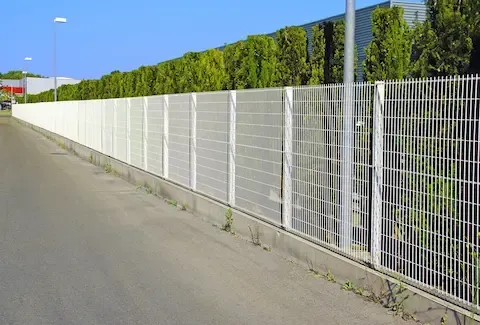
Anti-climb mesh fencing uses welded wire construction with small openings that prevent climbing while maintaining visibility for security monitoring. The mesh attaches to heavy-duty posts spaced closer together than standard fencing to prevent panel deflection under climbing attempts. Post-and-panel systems offer modular installation and easy replacement of damaged sections.
Palisade fencing provides maximum security through sharp-pointed steel pickets that deter climbing attempts. The pointed tops and closely-spaced pickets create an intimidating barrier while allowing visibility through the fence. This fencing type is common for utility substations, industrial facilities, and government properties requiring enhanced protection.
Razor ribbon and concertina wire can be added to most commercial fencing types to increase security effectiveness. These deterrent systems require careful installation to ensure they remain effective while complying with local regulations regarding their use. Some municipalities have restrictions on razor wire near public areas or pedestrian walkways.
Automated Gate Systems and Access Control
Commercial properties typically require multiple access points with different security levels and operational requirements. Sliding gates work well for wide openings like truck entrances, while swing gates are suitable for pedestrian access and smaller vehicle openings. Gate operators must be sized appropriately for gate weight and usage frequency to ensure reliable operation.
Sliding gate operators require level concrete pads and proper drainage to prevent operational problems during heavy rains common in South Texas. The track system must be installed perfectly level and aligned to prevent binding or premature wear. Motor selection depends on gate weight, usage frequency, and backup power requirements during electrical outages.
Access control integration allows gates to work with card readers, keypads, remote controls, and intercoms for different user groups. Master controllers can manage multiple gates and track access events for security monitoring. Emergency override systems ensure gates can be opened manually during power failures or equipment malfunctions.
Gate maintenance is critical for reliable operation, especially in coastal environments where salt air accelerates corrosion of moving parts. Regular lubrication, adjustment, and cleaning prevent costly repairs and ensure gates operate smoothly. Our automatic gate overview covers maintenance requirements and troubleshooting procedures for common operational issues.
Code Compliance and Permit Requirements
Commercial fence installation in Brownsville must comply with city zoning ordinances, building codes, and property-specific restrictions. Setback requirements vary by property type and location, with different rules for corner lots, commercial districts, and properties adjacent to residential areas. Height restrictions often differ between front, side, and rear property lines.
Building permits are typically required for commercial fencing projects, especially those involving gates with electrical operators or fencing over certain heights. The permit process includes plan review, inspection scheduling, and compliance verification before final approval. Your contractor should handle permit applications and coordinate required inspections.
Utility location is mandatory before any excavation work begins. Texas law requires calling 811 at least two business days before digging to have utilities marked. This service is free and prevents costly damage to underground infrastructure including gas lines, electrical cables, and fiber optic networks. Commercial properties often have more complex utility layouts than residential sites.
Americans with Disabilities Act (ADA) compliance affects gate design and operation for commercial properties open to the public. Gate opening forces, maneuvering clearances, and automatic operation may be required depending on the facility type and local interpretation of accessibility requirements.
Weather Considerations for Gulf Coast Installation
Brownsville's location near the Gulf of Mexico creates specific challenges for commercial fence installation. High humidity, salt air, and frequent severe weather require material selection and installation techniques that account for these environmental factors. Standard galvanized coatings may not provide adequate corrosion protection for facilities near the port or waterfront areas.
Wind load calculations must account for hurricane-force winds that periodically affect the region. Post spacing, foundation depth, and panel attachment methods may need to exceed standard requirements to ensure fence integrity during severe weather events. Some commercial properties install removable panels that can be taken down before hurricanes to prevent total loss.
Drainage considerations are critical since the area receives heavy rainfall during storm events. Fence line grading must direct water away from post foundations to prevent settling and alignment problems. Gates need proper drainage around track systems and operator housings to prevent water damage to mechanical and electrical components.
Material expansion and contraction from temperature changes affect fence alignment and gate operation. Installation techniques must accommodate thermal movement while maintaining structural integrity and operational reliability. This is especially important for long runs of ornamental fencing where thermal expansion can cause significant dimensional changes.
Professional Installation Process and Timeline
Commercial fence installation begins with detailed site survey and engineering analysis to determine optimal fence alignment, gate locations, and foundation requirements. This process includes utility location verification, soil analysis, and coordination with property operations to minimize disruption during construction. Most commercial projects require 2-4 weeks lead time for material ordering and permit approval.
Site preparation involves clearing vegetation, marking fence lines, and establishing temporary construction access. Excavation for post foundations follows engineered specifications based on soil conditions and fence height requirements. Concrete installation must cure properly before post loading, which may extend project timelines during hot weather.
Fence installation proceeds systematically from terminal points toward gate locations to ensure proper alignment and spacing. Each section must be plumb and properly tensioned before moving to adjacent areas. Gate installation requires precise measurement and alignment since operational problems often result from improper installation rather than equipment defects.
Final inspection and testing verify all components operate correctly and meet specified requirements. Gate operators need programming and adjustment for smooth operation, while access control systems require configuration and user training. Most commercial installations include warranty coverage and maintenance recommendations to protect your investment.
